
Blog
Website Redesigns That DON’T Hurt Conversion Rates
Talk to any scientific marketer, and they’ll advise against a standard site redesign. The reason is simple. When you redesign a site, you adjust all the variables at once, which means you don’t know which changes helped conversion rates and which ones hurt them.

Like mergers and acquisitions, the stats on site redesigns aren’t very encouraging. Most don’t generate the expected results.
So the question is: are site redesigns completely off the table?
For the longest time, that was the stance I maintained.
However, due to a series of strange events in my life, I recently found myself in the driver’s seat of a project that required us to make radical site updates. Traditional A/B testing was simply too time-consuming. As a result, we effectively had to do a site redesign.
But I didn’t want to shut off the old site and launch a new one blindly. I wanted to bring the experience I’ve gained over the last 17 years of A/B testing to ensure this redesign actually improved conversion rates.
The trick is to look at your site as a collection of components.
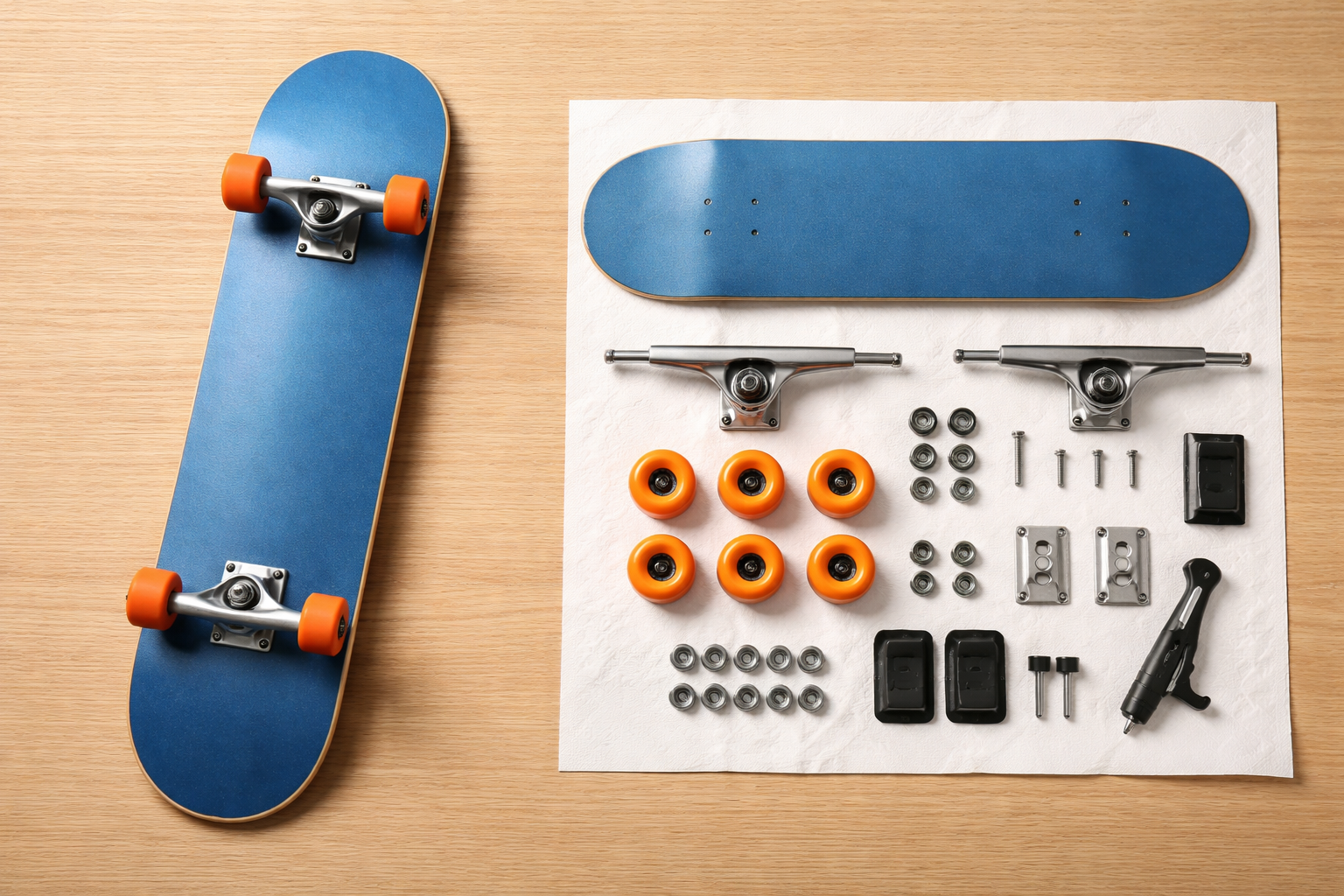
The components of your product page, for example, are:
1: The customer reviews
2: The product description
3: The image gallery
4: The section where ingredients are listed, etc.
When you do the redesign, what you’re really trying to do is improve the experience for each of the individual components.
So that’s what we did.
We started by adding markers across the entire site to understand which components had the strongest correlation with conversion rates. For example, on the product page, we found the image gallery had a very strong correlation with conversion. We also found that the Shop All page had a strong correlation. Ingredients turned out to be another major driver.
Once you map this out, the process becomes straightforward. You take each high-impact component and redesign it within the site’s existing scaffolding.
This is where our approach differed from a traditional redesign. Normally, agencies start with a blank canvas and rebuild everything from the ground up. Instead, we worked within the constraints of the existing structure and focused on significantly polishing individual components.
In total, we made roughly 149 improvements. For each one, we did a before-and-after analysis of the user experience at the component level. Directionally, we could see whether each change was doing its job.
What you don’t see at that stage is the full downstream effect. You’re looking at a snapshot: users interact with a component, then something happens next. As long as what happens next improves, you can conclude that the component is contributing positively.
Think of components as players on a team. Their doing their individual job doesn’t guarantee the team will win.
After making all those changes, we ran an aggregate analysis at the top level. That’s when we saw the full picture. Conversion rates improved. Linger time increased. Product discovery improved. Subscription rates went up.
That’s how we knew the changes were working.
This, in my mind, is the most scientific way to approach a site redesign.
There’s a lot more to unpack here. If you’re interested, drop a comment, and I’ll expand on this further.
Are You a Marketer?
I suspect you are because only a marketer would be interested in a topic titled Website Redesigns That DON’T Hurt Conversion Rates.
And if you are a marketer and liked this article, boy, do I have something fun for you.
Revealing It All
In our marketing lab 🥼, experimenting 🧪 for the last 16 years, we’ve discovered that one reason marketing campaigns fail is because they try to do too much.
Site visitors fall into 3 groups:
— Ready to buy
— Will never buy
— Interested, but need a little more convincing
The 3rd group has the biggest revenue potential.
Evidence Our Formula Works
This strategy mentioned above isn’t a theoretical framework. It’s the base formula for all our conversion work for clients. This marketing framework can be used to boost sales for sports products. To sell skincare products. Pet products. Consumer electronics. Athletic gear. Back pain solutions. Food items. High-end cooking tools. Plant growth soil.
Does the sales pitch always need to be shown as a popup? Nope.
It can also convert cold Facebook ad traffic, improve mobile conversion rates, generate calls, optimize your most important landing page, etc.
It can even be used to improve your overall conversion rates.
Converting Interested, but Need a Little More Convincing Group (With Examples)
Explained in this👇🏼 Nine Truths article: