
Blog
Full Funnel Optimization vs CRO
CRO, A/B Testing, and Why Full Funnel Optimization Is the Real Work
For most of my career, CRO meant one thing to me: A/B testing.
I’ve spent the last 17 years running experiments for more than 400 DTC brands. Different price points. Different categories. Growing markets, shrinking markets. Commodities and long purchase-cycle products. The common thread was always the same. My job was to design rigorous A/B tests, prove statistical lift, and move on to the next experiment.
And for a long time, that was my definition of conversion rate optimization.
But over those 17 years, something became impossible to ignore.
What 17 Years of A/B Testing Taught Me About CRO
Prices matter.
Offers matter.
Product images matter.
Shipping and return policies matter.
But the single biggest lever I kept seeing, over and over again, was how a company positions itself.
How the product is described and how the brand demonstrates that it understands the buyer better than anyone else.
Across hundreds of experiments, the pattern was remarkably consistent. When conversion rates jumped meaningfully, it was almost always because the messaging did one or more of the following things exceptionally well:
1: Demonstrated real expertise
2: Justified the price in a way that felt obvious, not defensive
3: Clearly answered the “why this vs everyone else” question
Those three elements showed up regardless of category, price point, or market conditions.
Want to see examples? Check out my 29 case studies.
Why Messaging Changes Buyer Behavior
Good messaging doesn’t just “sound better.” It changes behavior because it reduces uncertainty.
Most visitors don’t land on a website asking, “Is this $10 cheaper than the alternative?”
They’re asking, often subconsciously, “Do these people actually get my problem?”
When messaging works, it shortens the mental distance between curiosity and confidence. It makes the buyer feel like less research is required. Less comparison is needed. Less risk remains.
That’s not cosmetic optimization. That’s behavioral change.
And A/B testing is an incredibly effective way to prove that this kind of storytelling works.
The Problem With CRO as A/B Testing Alone
Here’s the uncomfortable realization I eventually had.
I was operating like a Navy SEAL on a special mission. I would parachute into a specific part of the website, run world-class experiments, uncover powerful messaging insights, and then leave.
Those insights were transforming chapters of the story on the website.
But they weren’t reaching the rest of the business.
The ads at the top of the funnel were still telling a weaker story.
Email flows were disconnected from what we had learned on-site.
The biggest volume of traffic, often 100x larger than on-site experiments, never benefited from those insights.
I told myself for years that this was just the nature of the work. I had a mandate. I executed on it. I moved on.
But over time, that stopped being satisfying.
Why CEOs Don’t Actually Care About CRO Metrics
Here’s the blunt truth.
CEOs don’t care that you ran 12 statistically significant A/B tests last year.
They care that the business did $10 million last year and $13.2 million this year.
A/B testing is a tool. A powerful one. But it’s not the outcome. When CRO is confined to isolated experiments, it can produce local wins without creating sustained, compounding growth.
That’s where full funnel optimization comes in.
CRO vs Full Funnel Optimization
CRO, in its narrow interpretation, often becomes synonymous with website A/B testing.
Full funnel optimization is different.
It treats the entire customer journey as one continuous story, not a collection of disconnected tactics.
There are three core components:
1: Acquisition
The first contact with the prospect. Ads, headlines, promises, framing.
2: On-site experience
The continuation of that story during the discovery phase. This is where traditional CRO and A/B testing do their best work.
3: Email marketing
The bridge between interest and action for the 90% of visitors who don’t buy on their first visit.
When these three are aligned, insights compound. When they aren’t, insights stall.
Why Insights Get Trapped on the Website
The way I think about it is this.
Imagine the customer journey as a book.
Website A/B testing usually optimizes chapters 8 through 12. That part of the book becomes compelling, clear, and persuasive.
But chapters 1 through 7 (acquisition) never get updated with what we’ve learned.
And chapters 13 through 20 (email and follow-up) don’t evolve either.
So the reader hits a great stretch in the middle… and then the story falls apart.
Full funnel optimization is about making the entire book interesting, not just a few chapters.
Matching Your Communication Horizon to the Buying Cycle
Most people don’t buy on their first visit.
If someone is buying a $200 air purifier, they’re going to:
– Search
– Compare alternatives
– Read specs
– Think about it
– Read reviews
– Talk to a spouse
– Come back later
That buying cycle might be 3 days.
If your communication only exists during a single website session, you’re misaligned with how people actually buy.
Email is powerful not because it “nurtures,” but because it extends your communication horizon to match the buyer’s decision timeline. It allows you to reinforce the same story from different angles, at different moments, until the buyer is ready.
The One Idea That Matters Most
Your story matters.
And it can’t live in just one place.
The same core narrative needs to be reflected, reinforced, and expanded across acquisition, on-site experiences, and email. Different angles. Same truth. Same positioning.
A/B testing is how you discover what works. Here are some A/B tests that show the power of storytelling.
Full funnel optimization is how you make those discoveries actually change the business.
Who Is This Guy
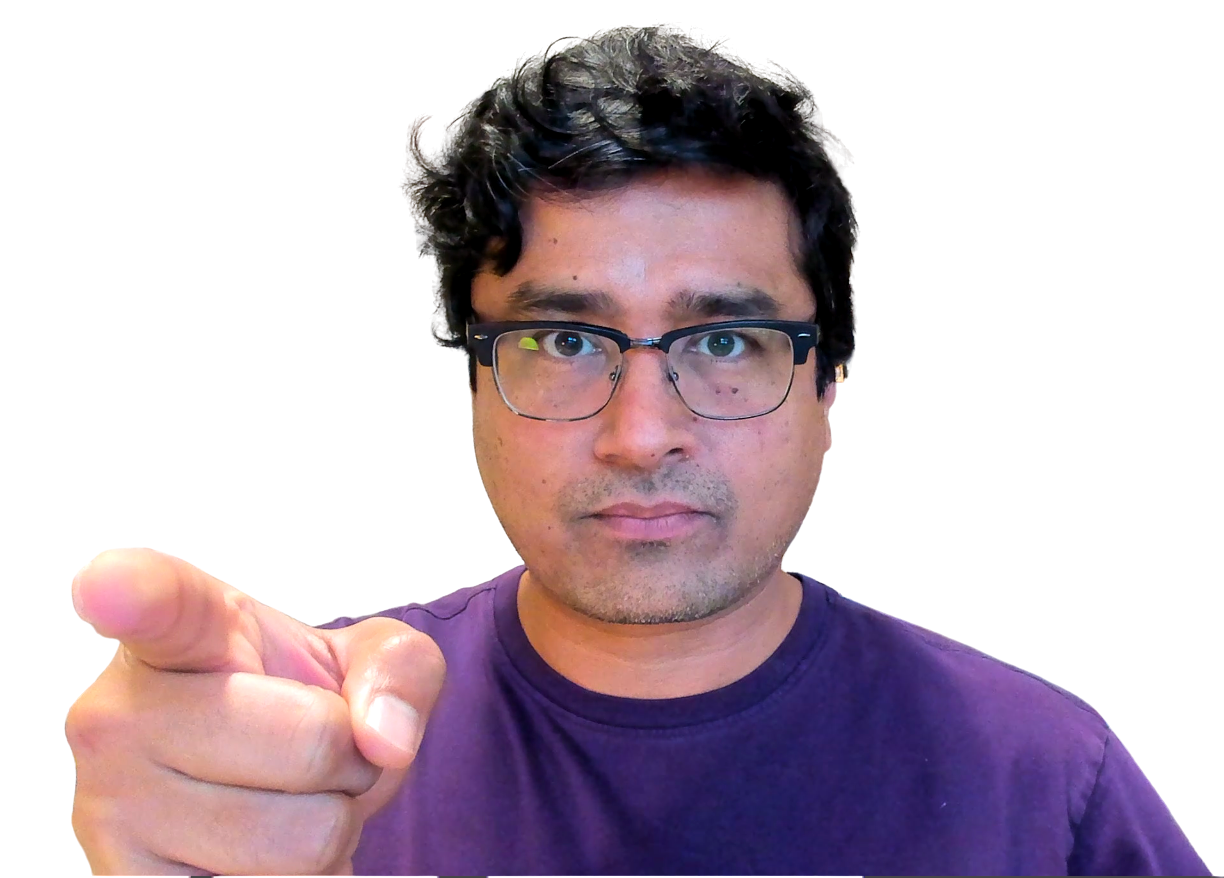
Hi, I’m Rishi.

I’ve been focused on conversion optimization for the last 17 years.
I consider myself more of a direct-response copywriter, so I use many copywriting principles to get new visitors to take action on a website, ideally pulling out their credit card and making a purchase.
I’ve run all kinds of experiments over the years and worked with over 400 DTC brands.